Hey there,
This month, the abstract concepts of "AI safety" and "data quality" became concrete, measurable, and enforceable. The scaffolding for the next decade of intelligent systems is being erected right now.
Let's break it down.
|
|
|
Microsoft Fabric Introduces a Native Graph Engine
|
What happened:
Microsoft Fabric announced the general availability of its new in-memory graph engine, built directly into the platform. It’s based on the labeled property graph (LPG) model, optimized for analytical use cases within Fabric’s OneLake environment.
The breakdown:
This engine brings graph-style relationship analysis closer to BI workloads, ideal for exploring customer journeys, fraud patterns, and supply chain relationships without leaving the Fabric ecosystem. It supports fast, ad hoc traversals and integrates naturally with Fabric’s existing data and compute layers. However, it’s designed for analytical graph queries rather than operational graph workloads.
Why it’s relevant:
Fabric Graph fills the middle ground between data warehouses and dedicated graph databases. It’s a strong fit for analytics teams that want to run relational context queries inside Fabric, without maintaining a separate graph infrastructure.
|
The "St. Regis Model": A New Open-Source Benchmark for AI Safety and Capability
|
What happened:
A consortium led by Anthropic, Meta, and the Singaporean government released the "St. Regis Model", a new state-of-the-art open-weight model. Its release wasn't just about performance; it came with a fully documented "Safety Case", a legal and technical framework detailing its tested capabilities, failure modes, and recommended deployment contexts.
The breakdown:
This moves beyond model cards to a defensible, auditable safety dossier. The St. Regis Model sets a precedent: future model releases, especially open-weight ones, will be judged not just on their MMLU score, but on the rigor of their safety proofs. It’s a direct response to regulatory pressure and public concern, creating a new product category: the "Responsibility-Ready" model.
Why it’s relevant:
When evaluating models (open or closed), your due diligence checklist now needs a "Safety Case" column. Procurement and legal teams will demand this. The era of deploying a model because it's "powerful" is over; deployment now requires a documented argument for why it's "safe."
|
AWS's "Bedrock Guardrails" Goes GA with Real-Time Policy Enforcement
|
What happened:
AWS announced the general availability of "Bedrock Guardrails", a service that allows enterprises to define and enforce AI safety and compliance policies in real-time, across any LLM (including those on Azure and Google Vertex). It blocks denied topics, filters sensitive information (PII, PCI), and can be configured with natural language.
The breakdown:
This is the "API firewall" for generative AI. Its cross-cloud capability is a masterstroke, positioning AWS as the neutral policy layer for a multi-model, multi-cloud world. Companies can now centralize compliance, ensuring that a customer service bot, an internal coding assistant, and a marketing copy generator all adhere to the same core rules.
Why it’s relevant:
Your generative AI governance strategy is no longer theoretical. You can now implement a centralized, enforceable policy. This drastically de-risks scaled AI deployment and is a mandatory first step before rolling out AI to customer-facing functions.
|
Databricks Announces "Lakehouse AI Monitoring" Challenging the Incumbent MLOps Players
|
What happened:
Databricks launched "Lakehouse AI Monitoring", a native tool that automatically tracks data drift, concept drift, and critically prompt drift and toxicity for all models, classic ML and LLM-based, registered in their Unity Catalog.
The breakdown:
This move bundles enterprise-grade model monitoring directly into the data platform, challenging standalone MLOps vendors. By leveraging the Unity Catalog's understanding of both data and AI assets, it can correlate model performance degradation directly with upstream data pipeline changes or shifts in user prompt patterns.
Why it’s relevant:
If your data and AI assets are already on Databricks, the case for a separate, expensive monitoring tool just got much weaker. This accelerates the consolidation of the data and AI stack, making the lakehouse the undeniable control plane for enterprise AI.
|
|
|
The OpenAI Distribution Play: The New App Store Gold Rush
|
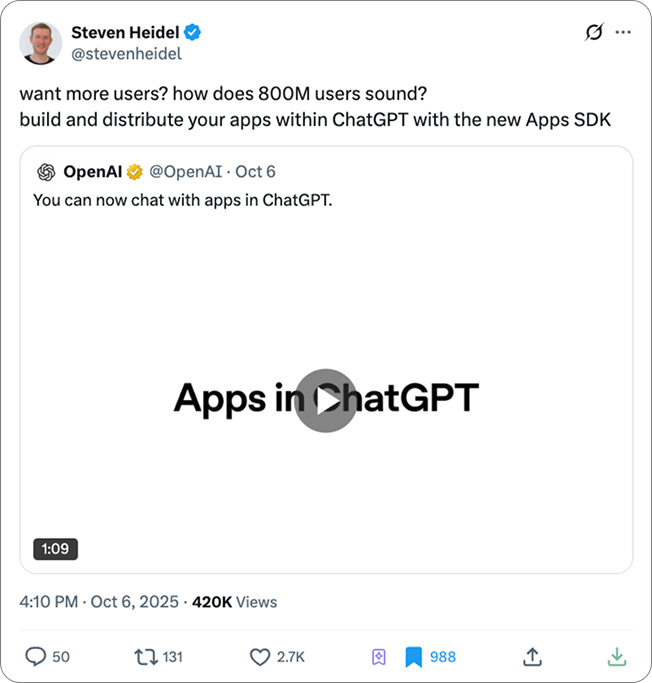
OpenAI released its new SDK and announced the coming App Store for ChatGPT. Together they open a large new channel for software distribution. With more than 800 million monthly users, ChatGPT becomes a space where developers can reach an audience instantly, inside the interface those users already rely on for work and problem-solving.
This shift is about reach and context. Most digital marketplaces depend on advertising and complex discovery systems. The ChatGPT environment begins from intent. People arrive ready to complete a task. That setting creates an unusually direct path between builder and user, without the friction of marketing or installs.
The tools created for this platform will function less like stand-alone apps and more like precise, embedded capabilities. A tax assistant might read and interpret documents. A data visualization agent could turn a file into a clear chart. A research tool might summarize new reports. Each use generates small payments through OpenAI’s system, forming an economy built around focused, repeatable actions.
For builders, this change reduces the cost and time needed to launch. Infrastructure, billing, and distribution already exist. What matters now is choosing a specific problem and solving it with clarity. The opportunity shifts from scale to focus.
At Syntaxia, our teams are already preparing for this environment. We are developing modules for clients who want to extend their services directly inside ChatGPT. We are also adapting ReadyData so users can upload a dataset, request an analysis, and receive a diagnostic report within a single chat. This new ecosystem favors those who build useful tools that fit naturally into the way people already work.
|
|
|
Apps Inside ChatGPT
OpenAI’s Apps SDK offers builders a distribution channel to ChatGPT’s huge user base, worth watching for go-to-market experiments.
|
America’s Financing Edge
a16z highlights Brian Schimpf on U.S. capital markets’ capacity to fund massive bets (e.g., $200B data centers) and why that matters for industry.
|
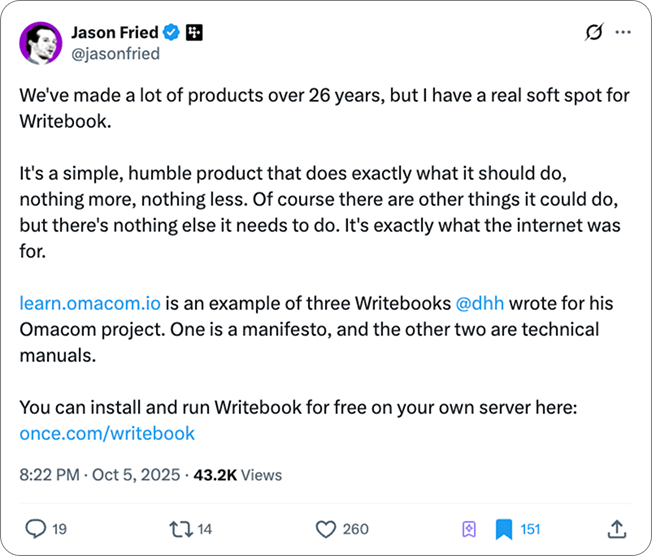
Writebook: One Job Well
A minimal, self-hostable tool that does exactly what it should. Useful reminder that tight scope and simplicity compound.
|
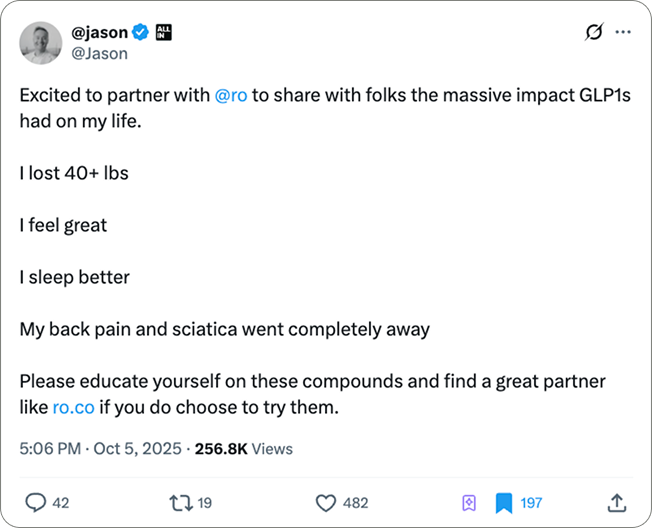
GLP-1s, Lived Results
Jason reports 40+ lbs lost, better sleep, and pain relief, urging people to learn the science and work with qualified providers.
|
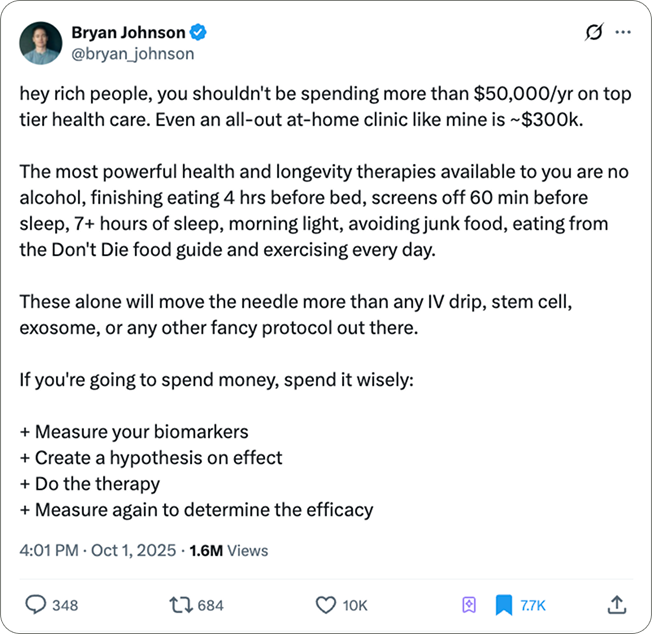
Spend on Basics First
Daily habits (sleep, light, food, exercise) measured with biomarkers move health outcomes further than pricey longevity protocols.
|
|
|
That’s it for now. I’ll be back with the next set of signals before month’s end.
The story doesn’t start here. Explore past editions → The Data Nomad
Stay sharp,
Quentin
CEO, Syntaxia
quentin.kasseh@syntaxia.com
|
|
|
Copyright © 2025 Syntaxia.
|
|
|
Syntaxia
3480 Peachtree Rd NE, 2nd floor, Suite# 121, Atlanta, Georgia, 30326, United States
|
|
|
|